Surge protection
1. Level I test surge protector (Level B protection)
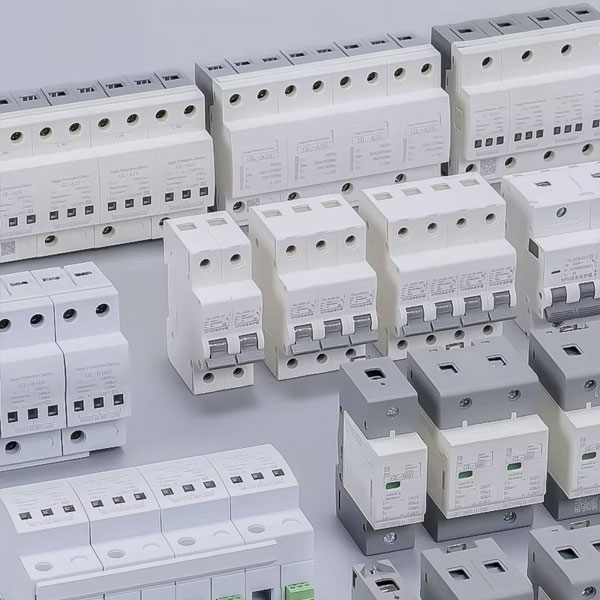
Level I SPD is a large current capacity lightning protection device, mainly designed for the super large energy surge generated by direct lightning strikes or close range lightning strikes. It uses a 10/350 μ s lightning waveform for impact testing and can withstand instantaneous lightning current discharge of tens to hundreds of kiloamperes. Its core function is to divert and discharge the original high-energy surge at the main incoming line of the building, significantly reducing the overall overvoltage level of the line. This type of protector does not have strict voltage limiting accuracy and focuses on high-energy discharge. It is usually installed at the boundary of primary lightning protection areas such as building main distribution cabinets, transformer low-voltage sides, and outdoor main incoming lines, and is the first barrier for overall lightning protection.
2. Level II test surge protector (Level C protection)
Level II SPD is a medium voltage limiting protection device, which is the most widely used type in power distribution systems. It adopts an 8/20 μ s induced surge waveform test to mainly protect against medium energy surges such as lightning induced overvoltage and power grid switch operation overvoltage. It has both current carrying capacity and voltage clamping accuracy, which can further limit the residual surge voltage after Level I protection within the range that the equipment can withstand. Usually installed in secondary lightning protection areas such as floor distribution boxes, equipment room main distribution boxes, workshop distribution cabinets, etc., as intermediate buffering and secondary protection core equipment for system lightning protection.
3. Level III test surge protector (D-level protection)
Level III SPD is a fine terminal protection with a small current capacity, but the voltage clamping accuracy is extremely high. It also uses an 8/20 μ s waveform test. Mainly targeting small residual surges and high-frequency pulse interference in the circuit, specifically designed to protect precision electronic equipment. This type of protector is compact in size and has a fast response speed. It is usually installed directly at the front end of precision instruments, weak current equipment, monitoring equipment, servers, smart homes and other terminal devices as the last line of protection to prevent equipment crashes, component breakdowns, and lifespan degradation caused by minor surges