News
How Does an NH3 Fuse Link Improve Industrial Circuit Protection?
Industrial power distribution systems require reliable protection against overloads and short-circuit faults. An NH3 fuse link rated at 660V and 630A provides a practical solution for high-current circuit protection when correctly matched with the electrical system. In this article, we explain how the NH3 fuse link works, why breaking capacity matters, and what engineers should consider when selecting fuse protection for industrial applications. Drawing on our manufacturing experience at Zhenghao Fuse, we also discuss key specifications, installation compatibility, and application requirements.
Table of Contents
- Why Is Circuit Protection Important in Industrial Systems?
- How Does an NH3 Fuse Link Improve Circuit Protection?
- Key Specifications of an NH3 660V 630A Fuse Link
- Why Does High Breaking Capacity Matter?
- Where Are NH3 Fuse Links Commonly Used?
- How to Select the Right NH3 Fuse Link
- Our Fuse Manufacturing Experience at Zhenghao Fuse
- Frequently Asked Questions
Why Is Circuit Protection Important in Industrial Systems?
In industrial electrical installations, a circuit fault can affect much more than a single component. A short circuit in a distribution cabinet may damage cables, switchgear, transformers, and connected machinery. In production environments, the resulting downtime can also interrupt entire manufacturing processes.
We have seen that choosing a fuse based only on its rated current is not enough. Engineers also need to consider the system voltage, prospective short-circuit current, load characteristics, and the coordination between protective devices.
For high-current distribution circuits, an NH fuse link is commonly selected because its compact construction, blade-contact design, and high interrupting capability make it suitable for demanding low-voltage applications.
An appropriately selected NH3 fuse link can help:
- Interrupt dangerous fault currents before they cause extensive equipment damage.
- Limit the thermal and mechanical stress placed on electrical components during short circuits.
- Protect distribution circuits and connected electrical equipment.
- Reduce the risk of fault propagation within electrical distribution systems.
- Make fuse replacement and routine maintenance more straightforward.
How Does an NH3 Fuse Link Improve Circuit Protection?
An NH3 fuse link operates through a controlled melting process. Under normal operating conditions, current passes through the fuse element without interrupting the circuit. When excessive current flows, the element generates heat and eventually melts once its operating characteristics reach the required conditions.
During a short-circuit event, the fuse element melts rapidly and produces an arc. The internal arc-quenching structure helps extinguish this arc, interrupting the fault current and isolating the affected circuit.
1. Controlled Fuse Element Operation
The fuse element is the central component responsible for responding to abnormal current. Its design influences the melting characteristics, operating time, and current-limiting performance. These factors determine how effectively the fuse responds to different fault conditions.
2. Ceramic Body for Electrical Insulation
Our NH3 fuse link uses a ceramic substrate as its main insulating body. This structure provides mechanical support and electrical insulation for the internal components. It also helps contain the arc during the interruption process.
3. Blade Contacts for Standardized Installation
The NH3 design uses blade contacts for connection with a compatible NH fuse base. This arrangement provides a practical installation and replacement method for industrial distribution equipment.
However, the fuse size alone does not guarantee compatibility. Contact dimensions, rated current, voltage, and fuse-base specifications should all be checked before installation.
Key Specifications of an NH3 660V 630A Fuse Link
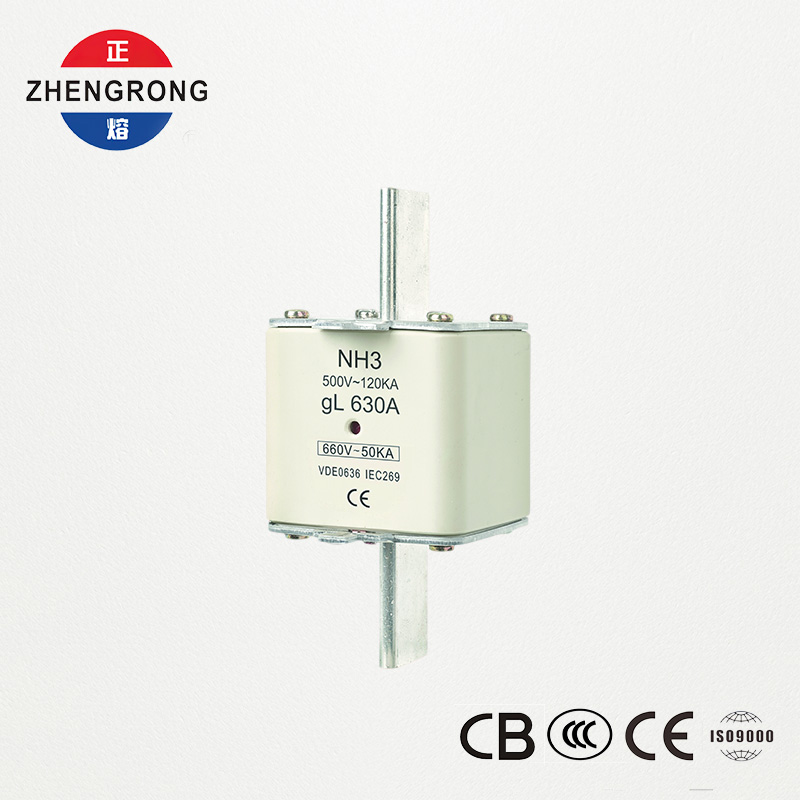
When evaluating a high-current fuse link, we recommend checking its electrical ratings and physical dimensions together. The following table summarizes the main specifications of our CE & IEC Certified Fuse Link NH3 660V 630A High Breaking Capacity.
| Parameter | Specification |
|---|---|
| Product Name | NH3 Fuse Link |
| Model | NH3 |
| Rated Voltage | 660V |
| Rated Current | 630A |
| Product Category | AC Fuse Link |
| Main Body Material | Ceramic |
| Brand | ZHENGRONG |
| Certificates Listed | CE, CCC |
| Customization | OEM / ODM |
| Manufacturer Experience | 40+ Years |
NH3 Fuse Link Dimensions
Physical dimensions are particularly important when replacing an existing fuse link or integrating a new one into a distribution cabinet. According to our supplied dimensional specifications, the NH3 model has the following measurements:
| Dimension | NH3 Specification |
|---|---|
| A | 150 ± 2.5 mm |
| B | 68.5 ± 1.5 mm |
| C | 20 ± 1.5 mm |
| H | 86 ± 2 mm |
| D1 | 6 ± 0.1 mm |
| D | 65 ± 1.5 mm |
These dimensions should be compared with the actual fuse base and installation drawings before ordering. For replacement projects, we recommend confirming the contact arrangement and mounting clearance rather than relying on the NH3 designation alone.
Why Does High Breaking Capacity Matter?
Breaking capacity is one of the most important parameters when selecting a high-current fuse link. It refers to the maximum prospective fault current that a fuse can safely interrupt under its specified voltage and test conditions.
In an industrial distribution network, a short circuit can produce a fault current many times higher than the normal operating current. If the selected fuse cannot interrupt that current safely, the protection system may not provide the expected level of fault isolation.
For this reason, we recommend checking three factors during fuse selection:
- Prospective short-circuit current: Determine the maximum fault current available at the installation point.
- Rated breaking capacity: Confirm that the fuse's certified interrupting rating meets or exceeds the calculated fault level at the applicable voltage.
- Voltage compatibility: Ensure that the fuse is suitable for the actual system voltage and AC application.
It is also important to distinguish between rated current and breaking capacity. A 630A rating describes the fuse's nominal current rating, not its maximum short-circuit interruption capability. These two specifications serve different purposes and must be evaluated independently.
For our NH3 660V 630A fuse link, we recommend confirming the rated breaking capacity from the corresponding technical datasheet and test documentation before finalizing a protection design.
Where Are NH3 Fuse Links Commonly Used?
The NH3 660V 630A fuse link is designed for high-current electrical protection applications. Its suitability depends on the system voltage, fault level, load characteristics, and coordination requirements.
Industrial Power Distribution Systems
Industrial distribution cabinets often supply multiple production lines, motors, and auxiliary equipment. An appropriately rated NH3 fuse link can provide short-circuit protection for high-current distribution circuits and help isolate faults before they affect other equipment.
Electrical Equipment and Control Cabinets
Large electrical assemblies may contain transformers, busbars, switching equipment, and power conversion components. NH3 fuse links can be incorporated into compatible fuse bases to provide protection against short-circuit conditions.
Commercial Buildings
Large commercial facilities use distribution systems to supply HVAC equipment, elevators, lighting, and other electrical loads. Properly coordinated fuse protection helps maintain electrical safety and supports reliable power distribution.
Photovoltaic and Renewable Energy Systems
Photovoltaic installations and wind power facilities contain electrical distribution and conversion equipment that require appropriately designed protection. NH fuse links may be used in suitable AC distribution sections, depending on the system configuration and electrical ratings.
For DC photovoltaic circuits, an AC-rated fuse link should not be substituted without verifying its DC voltage rating and DC breaking capacity. The protection device must match the actual circuit conditions.
How to Select the Right NH3 Fuse Link?
When we discuss fuse selection with electrical equipment manufacturers and engineering teams, we focus on the complete protection requirements rather than the product name alone. The following checks can help avoid common selection problems.
| Selection Factor | What to Check | Why It Matters |
|---|---|---|
| Rated Voltage | 660V system compatibility | Prevents voltage mismatch during operation and interruption. |
| Rated Current | 630A and actual load conditions | Ensures the fuse rating is suitable for the protected circuit. |
| Breaking Capacity | Maximum prospective short-circuit current | Confirms that the fuse can safely interrupt the expected fault current. |
| Fuse Size | NH3 dimensions and blade contacts | Ensures compatibility with the existing fuse base. |
| Operating Characteristics | Load type and protection coordination | Helps prevent unnecessary fuse operation. |
| Certification | Applicable CE and IEC documentation | Supports technical compliance and project documentation. |
One practical point is worth emphasizing: a 630A fuse is not automatically suitable for every circuit carrying 630A. Continuous loading, ambient temperature, installation conditions, cable capacity, and the time-current characteristics of the protection system all influence the final selection.
Our Fuse Manufacturing Experience at Zhenghao Fuse
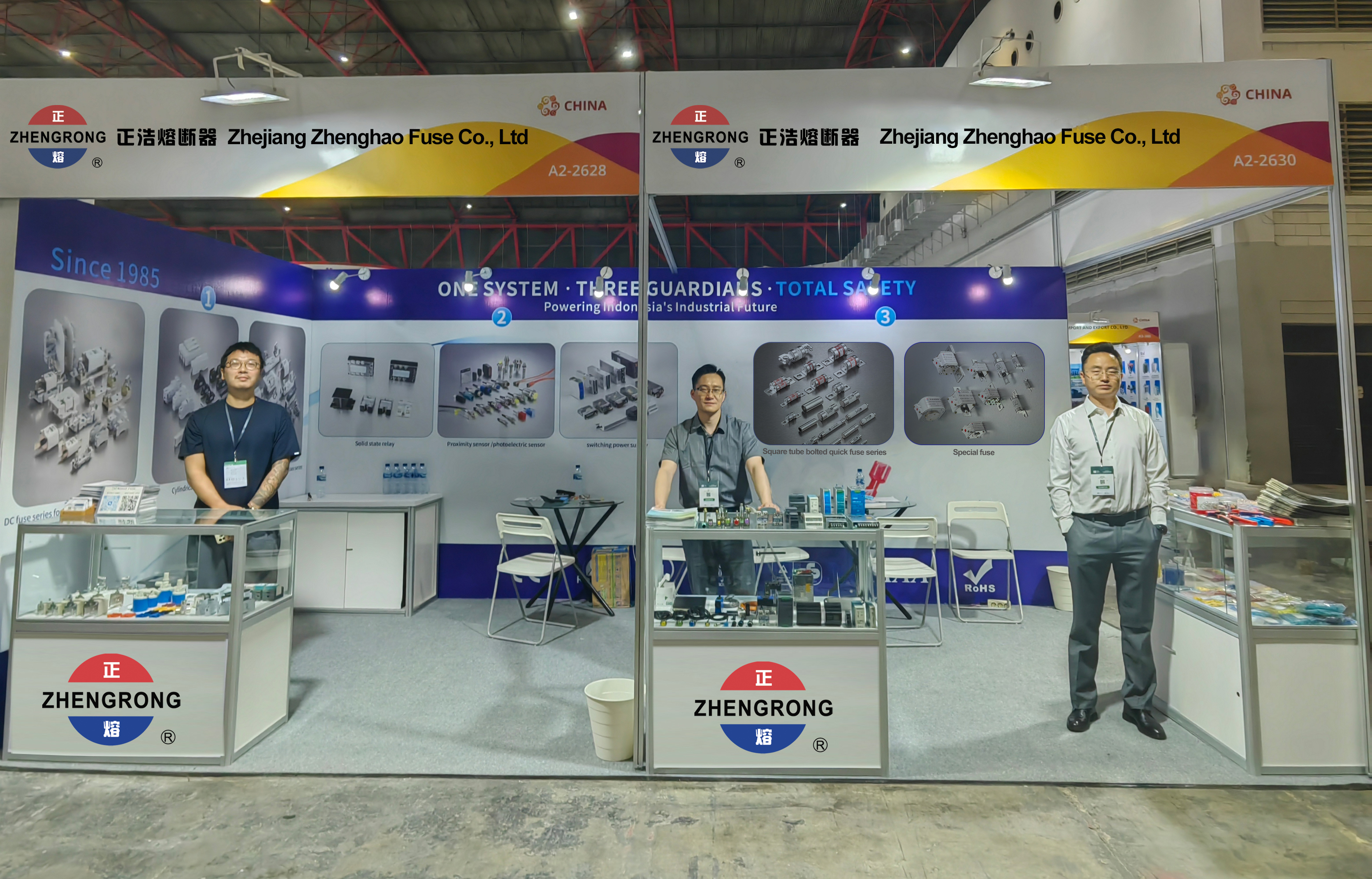
At Zhenghao Fuse, we have been engaged in fuse manufacturing since 1985. Starting with low-voltage fuse products, we have gradually expanded our product range to more than 12 series and over 400 varieties.
Our product range includes cylindrical fuse links, screw fuse bases, square pipe fuse links with knife contacts, and other low-voltage fuse products. Under our registered trademark ZHENGRONG, we supply fuse solutions for different electrical protection requirements.
With more than four decades of manufacturing experience, we understand that industrial fuse selection involves more than matching voltage and current ratings. Product dimensions, fuse-base compatibility, operating characteristics, and certification documents all need to be considered.
We also provide OEM and ODM services for customers with specific product requirements. Depending on the project, we can discuss product specifications, customized dimensions, branding, and packaging arrangements.
Our manufacturing background and product range allow us to support different low-voltage fuse requirements. To explore additional models and product configurations, visit our fuse products page.
Frequently Asked Questions
1. What does NH3 mean in an NH3 fuse link?
NH3 refers to the physical size designation of the NH fuse link. It identifies a particular blade-contact fuse format and its corresponding installation dimensions. It does not indicate the rated current by itself, as NH3 fuse links are available with different current ratings.
2. What are the rated voltage and current of an NH3 660V 630A fuse link?
The product discussed in this article has a rated voltage of 660V and a rated current of 630A. These values should be checked against the actual electrical system and the manufacturer's technical documentation before installation.
3. What is the difference between rated current and breaking capacity?
Rated current indicates the nominal current the fuse is designed to carry under specified conditions. Breaking capacity indicates the maximum prospective fault current that it can safely interrupt at its specified voltage. Both values are essential for correct fuse selection.
4. Can an NH3 fuse link replace an NH1 or NH2 fuse link?
Not directly. NH1, NH2, and NH3 have different physical dimensions and contact arrangements. A replacement must match the fuse base, contact configuration, rated voltage, current, and protection requirements.
5. What material is used in the NH3 fuse link body?
The NH3 fuse link described here uses a ceramic body. Ceramic provides electrical insulation and mechanical support while helping contain the arc during the fuse interruption process.
6. Are NH3 fuse links suitable for photovoltaic systems?
They may be suitable for compatible AC distribution sections in photovoltaic installations. However, DC-side protection requires a fuse link specifically rated for the applicable DC voltage and breaking capacity. Always verify the circuit configuration before selection.
7. What should I confirm before purchasing a 630A NH3 fuse link?
Check the rated voltage, rated current, breaking capacity, fuse dimensions, blade-contact configuration, operating characteristics, and applicable certification documents. For replacement projects, confirming the existing fuse base dimensions is particularly important.
8. Does Zhenghao Fuse provide customized fuse products?
Yes. Zhenghao Fuse offers OEM and ODM services. We can discuss customized product dimensions, branding, and packaging according to project requirements and manufacturing feasibility.
Conclusion
An NH3 fuse link plays an important role in industrial circuit protection by interrupting abnormal current and helping limit the consequences of short-circuit faults. However, reliable protection depends on selecting the correct rated voltage, current, breaking capacity, and physical configuration for the application.
With manufacturing experience dating back to 1985 and more than 400 fuse product varieties, Zhenghao Fuse continues to provide low-voltage fuse products for different industrial and electrical distribution requirements. When selecting an NH3 660V 630A fuse link, we recommend reviewing the complete technical specifications and confirming compatibility with the intended protection system.
For technical information or OEM/ODM inquiries, you can contact Zhenghao Fuse to discuss your project requirements.
Related News
- What Should You Check Before Choosing a 2 Pole DC Miniature Circuit Breaker DZ47 C32 500V?
- What Safety & Performance Benefits Does IEC 60269 415V High Current Fuse Deliver For Industrial Power Distribution Systems?
- Short News: CCC Mandatory Certification Officially Implemented for Fuse Industry
- Why 1000VDC Solar PV Fuse Holder Matters for Reliable Solar Power Systems?
- Why Is a Photovoltaic Fuse Essential for Solar Power Systems?
- Why Your Solar Array's Safety Hinges on Choosing the Right Photovoltaic DC Fuse
Leave me a message
New Products


News Recommendations